

The Winter Olympics have always been about moments - miracle goals, frozen rivalries, and the rare occasions when the best players on the planet wear national colors instead of club crests. In February 2026, Olympic ice hockey returns to that purest form.
Milano Cortina 2026 is shaping up to be one of the most anticipated hockey tournaments in decades. For the first time since Sochi 2014, NHL players are officially back. Canada, the United States, and Europe’s elite will finally meet in true best-on-best competition again. At the same time, the women’s game arrives stronger, deeper, and more competitive than ever thanks to the rise of the Professional Women’s Hockey League (PWHL).
Add in brand-new arenas, a multi-city Olympic setup, political absences, and legitimate gold-medal contenders across both tournaments - and you have a Games that could redefine Olympic hockey for a new generation. Let’s break down what awaits us in Milan.
Where Olympic hockey will be played
All ice hockey competitions at Milano Cortina 2026 will take place in the Milan cluster, across two venues: PalaItalia Santa Giulia and a converted pavilion at Fiera Milano.
PalaItalia, the flagship venue, is a newly constructed arena designed specifically with Olympic hockey in mind. It will host the majority of marquee games, including medal rounds. The secondary venue at Fiera Milano will handle preliminary-round matchups and scheduling overflow. The road to completion, however, has not been smooth.
Arena delays and why the NHL is watching closely
Construction delays at the Santagiulia site have been one of the biggest talking points heading into the Games. As recently as mid-December, the ice surface had not yet been installed, forcing the cancellation of planned test events.
The NHL and NHLPA have been directly involved in monitoring progress, repeatedly stating that player safety is non-negotiable. League officials have sent their own ice experts to Italy, and NHL Commissioner Gary Bettman has made it clear: if the rink is not deemed safe, NHL players will not participate.
Complicating matters further is the rink size. The Olympic ice surface will be slightly shorter and wider than a standard NHL rink, though still compliant with IIHF regulations and consistent with Beijing 2022 dimensions. While officials insist this will not affect safety or quality of play, it adds another variable to an already tense build-up.
Despite the concerns, the IIHF remains confident the tournament will go ahead as planned - even if the arena is not fully complete in terms of seating and final finishes.
A historic return: NHL players at the Olympics
The headline story of Milano Cortina 2026 is as simple as it is monumental: NHL players are back at the Olympic Games. For the first time since Sochi 2014, the world’s best hockey players will wear their national jerseys on the biggest stage in winter sport. After missing the past two Olympics due to scheduling disputes and the COVID-19 pandemic, the NHL’s return restores Olympic hockey to true best-on-best status - something fans, players, and federations have been waiting over a decade to see.
The difference is nothing short of seismic. Instead of patchwork rosters built around collegiate players and European leagues, Milano Cortina 2026 will showcase the sport at its absolute peak. Superstars like Connor McDavid, Sidney Crosby, Nathan MacKinnon, Auston Matthews, Jack Eichel, and Quinn Hughes are expected to headline a tournament stacked with elite talent across every position.
For Canada, that means a roster once again loaded with generational players and championship pedigree. Canada is the most successful nation in Olympic men’s hockey history, with nine gold medals, including victories in 2010 and 2014, the last two Olympics to feature NHL participation. The return of leaders like Sidney Crosby - already a two-time Olympic gold medalist - alongside McDavid and MacKinnon creates a blend of experience and explosive skill rarely seen in international play.
The United States arrives equally dangerous. While the Americans have won two Olympic gold medals in men’s hockey - most famously the 1980 “Miracle on Ice” - they have never captured gold in the NHL era of the Olympics. That history adds extra urgency to a roster built around Auston Matthews, Jack Eichel, elite goaltending depth, and a generation of players who have grown up watching international best-on-best hockey only on highlight reels.

Connor McDavid (Canada), source: NHL.com
Beyond North America, the NHL’s return elevates every matchup. Sweden, Finland, Switzerland, and Czechia will all ice rosters featuring NHL stars alongside experienced European veterans, shrinking the gap between traditional powers and challengers. Finland, the reigning Olympic champion from 2022, now gets the chance to defend its title with NHL talent fully involved.
The impact of NHL participation goes far beyond star power. It changes the speed of the game, the physicality, the tactical detail, and the pressure of every shift. Olympic gold once again becomes a career-defining achievement - not a footnote, but a legacy marker. In short, Milano Cortina 2026 doesn’t just welcome NHL players back to the Olympics. It restores the meaning of Olympic hockey itself.

Juraj Slafkovský (Slovakia), source: Olympics.com
Men’s tournament format: how gold will be won
The men’s tournament features 12 nations, divided into three groups of four (Group A - Canada, Czech republic, Switzerland, France, Group B - Finland, Sweden, Slovakia, Italy, Group C - United States, Germany, Denmark, Latvia). Each team plays three round-robin games to establish seeding.
From there, the format rewards excellence while preserving chaos:
*Group winners automatically advance to the quarterfinals
*The highest-ranked remaining team also earns a bye
*The other eight teams play qualification games to reach the quarterfinals
From that point on, it’s single-elimination hockey - semifinals, bronze medal game, and gold medal game. Overtime rules differ from the NHL, as does the points system, and fighting is strictly prohibited. International structure meets NHL-level talent - often a volatile, dramatic combination.

Leon Draisaitl (Germany), source: DEB
The favorites: who enters as gold-medal contenders
Canada
Canada arrives with unmatched depth and experience. Their projected roster reads like a Hall of Fame preview: Crosby, McDavid, MacKinnon, young sensation Macklin Celebrini, Makar, and a supporting cast built almost entirely from elite NHL talent. Canada has won Olympic gold in 2010 and 2014 and remains the gold standard in best-on-best hockey. Chemistry, experience, and high-pressure pedigree make them a favorite once again.
United States
The U.S. brings its strongest Olympic roster in decades. Auston Matthews leads a group stacked with speed, skill, and defensive mobility. Goaltending depth featuring Connor Hellebuyck, Jake Oettinger, and Jeremy Swayman gives the Americans a legitimate edge. The Americans have not won Olympic gold since 1980, but recent success at the World Championship and the 4 Nations Face-Off suggests this is no longer a rebuilding program.

Team USA, source: NHL.com
Sweden and Finland
Sweden’s structured, disciplined approach always translates well to international tournaments, while Finland enters as the reigning Olympic champion from 2022. Both teams may lack the superstar density of North America, but their systems, cohesion, and comfort on international ice make them dangerous. Players like Karlsson, Saros, Rantanen or Nylander are keeping hopes high.
Potential surprises and under-the-radar threats
Switzerland
Switzerland has quietly become one of the most consistent international programs in the world. With NHL contributors like Nico Hischier and Timo Meier, combined with elite European-league veterans, Switzerland is a legitimate medal threat.
Czechia and Germany
Czechia blends NHL skill with seasoned European scorers and has a strong track record in short tournaments. Germany, meanwhile, continues to build on its 2018 silver medal run and could disrupt group play. In Olympic hockey, one hot goalie or one perfect game plan can rewrite the bracket. Well, you can't write off David Pastrňák and Leon Draisaitl!

David Pastrňák (Czechia), source: Radio Prague International
Women’s hockey: deeper, faster, better than ever
While the men’s return grabs headlines, the women’s tournament may deliver the highest level of play in Olympic history. Milano Cortina 2026 is the first Winter Games held during the era of the Professional Women’s Hockey League (PWHL). That single change has transformed preparation, depth, and global competitiveness. Instead of assembling every four years, the world’s best women now compete nightly in a fully professional environment - sharpening skills, raising standards, and narrowing gaps between nations.
Women’s tournament format and contenders
Ten nations will compete, split into two groups of five (Group A - Canada, United States, Finland, Czechia, Switzerland, Group B - Germany, Sweden, Japan, Italy, France). All teams advance to the knockout phase, ensuring that every game matters - both for seeding and momentum.
Canada vs USA - again, but evolved
Canada and the United States remain the dominant forces, led by generational stars such as Marie-Philip Poulin and Hilary Knight. Their rivalry has defined women’s hockey for decades, and Milano Cortina may produce another iconic chapter. The difference this time? Depth. Both rosters are filled with PWHL players performing at peak levels, reducing reliance on short camps and long preparation windows.
Challengers on the rise
Finland and Czechia continue to close the gap. Finland’s consistency on the Olympic podium is no accident, while Czechia’s rapid rise over the past four years makes them a genuine medal contender. Switzerland, Sweden, and Japan add further unpredictability to the bracket.
Russia and Belarus: notable absences
For the second consecutive Olympic Winter Games, Russia and Belarus will not take part in Olympic ice hockey, leaving a significant gap in both the men’s and women’s tournaments at Milano Cortina 2026.
The International Ice Hockey Federation (IIHF), in alignment with the International Olympic Committee (IOC), has upheld its ban on Russian and Belarusian national teams as a direct response to Russia’s ongoing military aggression against Ukraine, supported by Belarus. The decision follows the same framework applied at the Paris 2024 Summer Games and remains in effect regardless of potential diplomatic developments ahead of February 2026.
Under current IOC guidelines, Russian and Belarusian athletes may only compete in limited individual sports as Individual Neutral Athletes, without national flags, anthems, or official representation. Team sports - including ice hockey - are explicitly excluded from this exception, meaning there will be no Russian or Belarusian men’s or women’s hockey teams at the Games.

Alexander Ovechkin (Russia), source: NBC Sports
From a sporting perspective, their absence reshapes the Olympic landscape. Russia has historically been one of the most decorated nations in Olympic hockey, with multiple gold medals and decades of elite talent drawn from both domestic leagues and the NHL. Belarus, while not a traditional medal contender, has often played the role of disruptor in international tournaments, capable of influencing group standings and knockout paths.
Without them, group dynamics change. Medal pathways open. Margins tighten. Nations like Switzerland, Czechia, Germany, and Latvia gain clearer routes to the knockout rounds, while the overall balance of power subtly shifts toward North America and Scandinavia.
Beyond competitive implications, the absence also underscores how deeply global politics continue to intersect with international sport. Milano Cortina 2026 will once again be contested without one of hockey’s historic powers - a reality that shapes not only brackets and predictions, but the broader narrative of the Games themselves.
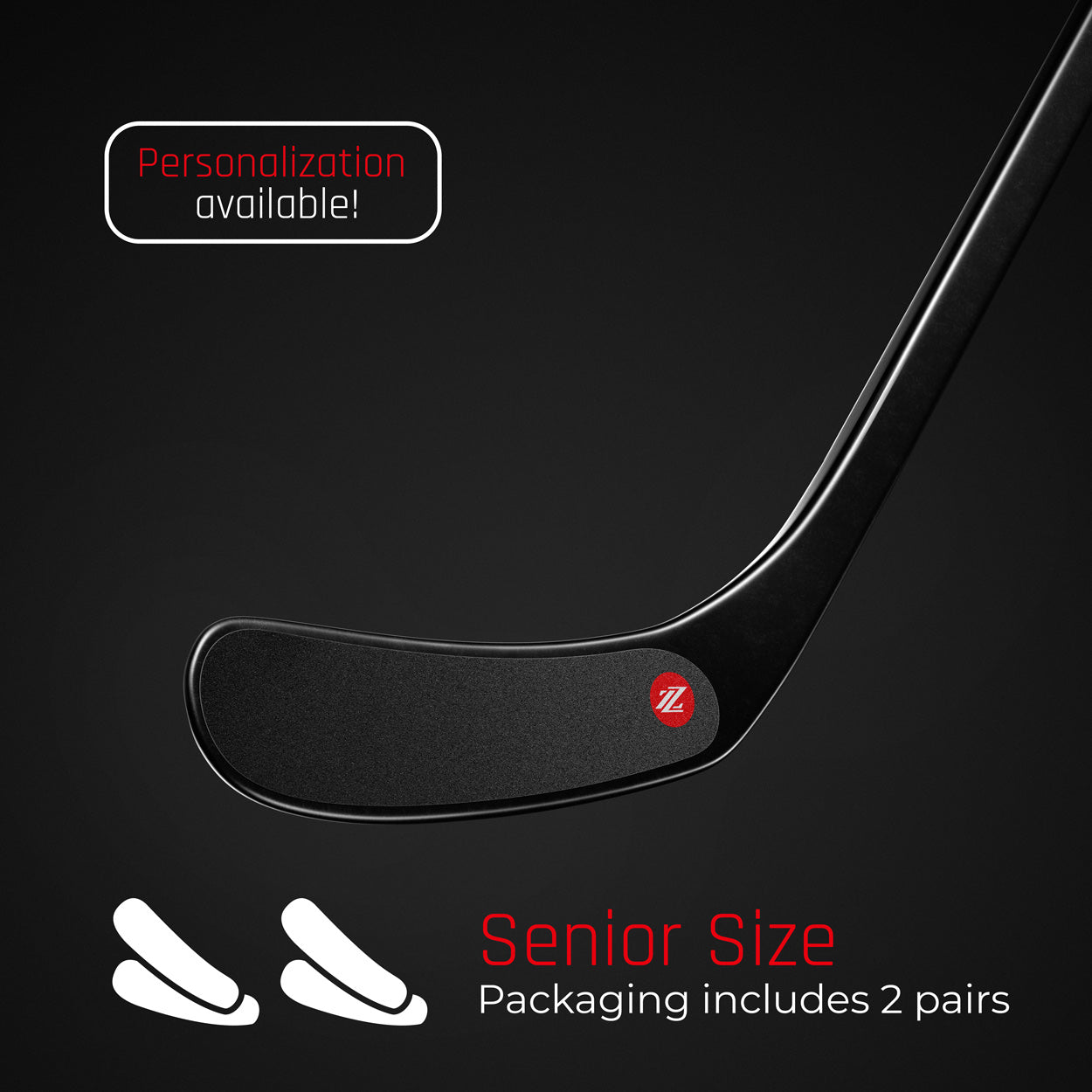
Products featured in this blog post




Why Milano Cortina 2026 matters for hockey
These Games represent more than medals. They are a referendum on international hockey’s future - on cooperation between leagues and federations, on investment in women’s sport, and on whether Olympic hockey can reclaim its place alongside the Stanley Cup and World Championship as the sport’s ultimate stage.
With NHL players back, women’s hockey thriving, and global interest at a high point, Milano Cortina 2026 has the chance to deliver something rare: an Olympics that truly reflects hockey at its best.
Final whistle: what to expect
Expect intensity. Expect controversy. Expect unforgettable moments. Milano Cortina 2026 will be played on brand-new ice, inside newly built arenas, under global scrutiny - and with the world’s best players carrying the weight of national expectation on every shift. From the opening faceoff to the final gold-medal celebrations, Olympic hockey in 2026 will not simply revisit the past. It will redefine what the tournament can be in the modern era.
With NHL players back for the first time since 2014, the margins will be razor-thin. One power play, one overtime bounce, one goaltending performance can define a legacy. Careers that already include Stanley Cups, Hart Trophies, and scoring titles will be measured against Olympic gold - a prize that remains uniquely rare and emotionally charged.
At the same time, the women’s tournament enters a new phase of its evolution. Fueled by the rise of the PWHL and unprecedented global depth, Milano Cortina 2026 has the potential to deliver the most competitive women’s Olympic hockey event ever staged - not just in terms of rivalry, but in overall quality of play.
For fans, this is a return to appointment viewing. For players, it is a once-in-a-generation stage. For brands built around performance, innovation, and elite competition, it is a reminder of what happens when preparation meets pressure. Milano Cortina 2026 is not just another Olympic tournament.
It is the puck drop the hockey world has been waiting for - and this time, the very best will be on the ice.
Video sources: YouTube/Corriere delle Alpi, CBC News, Olympics, NHL, Brodie Brazil, Ambasciata d'Italia a Oslo


 Hockey Hall of Fame Class of 2025: Legends, Legacy and What Comes Next

 Zdeno Chára’s Legacy: How Slovakia’s Giant Ruled the NHL Blue Line